


Staying Safe When Downloading An Instagram Profile Viewer App
About Staying Safe When Downloading An Instagram Profile Viewer App
Why Most Clear Instagram Profile Viewer Tools Fail: A Hard-Won Lesson in Digital Reality
Let’s clip through the noise. You’ve been there – scrolling in the manner of a private profile, curiosity piqued, maybe a backache of matter or easy human fascination. You type ”clear Instagram private profile viewer” into Google, and hastily, the first page is littered with sites promising instant entrance: ”View Any Private Account in 10 Seconds! 100% Pardon! No Survey!” Your heart races. Could this actually function? You click, enter the username, watch a perform enhance bar crawl to 99%, and then… the survey wall hits. Or worse, you’on the subject of redirected to a undependable download page promising the ”unlocker tool.” Exasperation sets in. You near the tab, feeling foolish. But have you ever paused to ask why these tools therefore consistently fail? It’s not bad luck. It’s not you living thing interested. It’s a fundamental catastrophe between Instagram’s architecture, the realities of monetizing ”clear” facilities online, and the sheer impossibility of the union bodily made. Having spent years navigating the murky waters of social media APIs, security research, and the endless cat-and-mouse game along with platforms and third-party tools – including personally psychiatry dozens of these thus-called ”spectators” out of professional curiosity (and, yes, a few moments of disorder) – I can say you gone perfect reality: the overwhelming majority of clear Instagram profile viewer tools fail because they are technically incapable of delivering upon their core treaty, and their failure is often by design to encourage a far less noble direct.
The core misunderstanding driving these tools’ popularity is a risky oversimplification of how Instagram works. People imagine Instagram profiles as simple, publicly accessible web pages – subsequent to a basic HTML site you could scrape bearing in mind a curl command. This is fundamentally incorrect, especially for private accounts. Instagram’s backend is a fortress built roughly its proprietary, undocumented, and fiercely guarded Graph API. Accessing any user data, especially from a private account, requires explicit, authentic entry approved by the account holder themselves through Instagram’s attributed login flow (OAuth 2.0). There is no public endpoint, no loophole, no magic URL that bypasses this. Subsequently you set your profile to private, you’re not just hiding it from casual browsers; you’vis-ð°-vis instructing Instagram’s servers to refuse all data requests for that profile unless they arrive once a legal, addict-specific entrance token – a token you solitary get by logging in as that addict or having them explicitly endorse an app via Instagram’s credited channels. Release viewer tools claiming to bypass this are, quite comprehensibly, selling snake oil. They contract entry to data that Instagram’s architecture is explicitly intended to prevent unauthorized third parties from obtaining. It’s next promising to entry a bank vault once a toothpick – the mechanics don’t exist.
Suitably, if they can’t actually admission the data, what complete these tools do? This is where experience reveals the genuine bill. On top of countless tests conducted in unaided virtual machines (a non-negotiable safety practice I’ve researcher the hard showing off), a definite pattern emerges:
-
The Bait-and-Switch Survey Wall: This is the most common tactic. You enter the username, the tool shows a convincing lightheartedness (act out loading bar, ”decrypting data” messages), and then just in the past revealing the profile, it hits you considering: ”To avow you’on the order of human and prevent abuse, resolved this brusque survey!” These surveys are never unexpected. They often require signing occurring for costly trials, submitting personal information (phone number, dwelling), or downloading questionable software. The tool never intended to work you the profile. Its sole mean is to earn a commission (often $1-$5 per completed survey) from affiliate networks. The ”viewer” is merely a lure. I’ve seen tools where the survey offer changes based on your IP geolocation – targeting users in regions taking into consideration progressive payout rates for specific offers. The moment you engage taking into consideration the survey, the tool has already ”succeeded” from its direction; showing you a profile was never the objective.
-
The Malware Delivery Vehicle: Far afield more insidious are the tools that prompt you to download a ”viewer app,” ”browser extension,” or ”unlocker tool.” These executables or extensions are frequently bundled later than malware. In my own chemical analysis (using VirusTotal and sandbox analysis), I’ve encountered:
- Information Stealers: Variants similar to Agent Tesla or FormBook, intended to harvest login credentials (not just for Instagram, but banking, email, etc.), cookies, and clipboard data from your robot.
- Adware/Browser Hijackers: Aggressively injecting ads, varying your homepage/search engine, and tracking your browsing to support more targeted (and often malicious) ads.
- Cryptominers: Silently hijacking your CPU/GPU to mine cryptocurrency, slowing your system to a crawl and increasing your electricity report.
- Backdoors: Providing cold admission to attackers, potentially turning your machine into allocation of a botnet for DDoS attacks or additional malware distribution.
The ”free” entry comes at a catastrophic cost to your digital security and privacy. Instagram’s own security teams for all time monitor and accept alongside infrastructure allied taking into consideration these malware-distributing viewer scams – a testament to their prevalence and danger.
-
The Data Harvesting Waylay: Some tools don’t hastily taint you but on the other hand harvest the usernames you search for. Why? Because lists of usernames people are frustrating to view privately are valuable intel. They indicate potential targets for phishing (”Hey, I axiom you were looking at [X] profile – here’s a colleague to see it!”), social engineering, or even building datasets for resale to marketers or, worse, malicious actors. Your curiosity becomes a commodity. I’ve observed network traffic from these sites sending search queries to profound endpoints unrelated to any true viewer play-act, usefully indicating data gathering.
-
The Illusion of Functionality (Scarce, But Dangerous): Occasionally, a tool might seem to produce an effect – showing a profile picture or a few posts. How? Usually, it’s scraping data from public profiles or using old-fashioned, leaked session cookies (often obtained through phishing or malware elsewhere). If it shows a private profile, it’s just about no question either:
- Using a Compromised Account: The tool operator has stolen login credentials (via phishing, malware, or data breaches) for some accounts and is using those to view profiles – a violation of Instagram’s ToS and illegal in many jurisdictions. Your search might motivate them to log into a stolen account to fetch the data you requested, putting that account holder at risk.
- Showing Stale/Cached Data: Displaying antiquated recommendation from considering the profile was public or from a previous breach.
- Given Fabrication: Generating a play a role profile based on the username (common for non-existent users).
In none of these cases is the tool providing a authentic, real-period, authorized view of a currently private profile as promised. It’s smoke and mirrors, often backed by significant risk.
The upshot of interesting with these tools extend far beyond wasted grow old. I’ve seen colleagues’ Instagram accounts until the end of time banned after their session cookies were stolen via a malicious viewer development and used for spam. I’ve assisted contacts whose bank accounts were drained after guidance stealers harvested credentials from a action viewer download. The authentic gray place is afterward significant: circumventing Instagram’s entry controls violates the Computer Fraud and Abuse Achievement (CFAA) in the Associated States and thesame laws globally, potentially exposing users to responsibility, while enforcement adjacent to stop-users is rare compared to action next to the tool operators. More tersely and universally, you risk compromising your personal device, your data, and your privacy – everything for a harmony that was never technically practicable.
Why does this ecosystem persist despite the near-universal failure rate? Simple economics. Creating a convincing fake viewer site is incredibly cheap and quick – a few hours of basic web build up, some addition animations, and affiliate network sign-ups. The potential return, even taking into consideration a low conversion rate upon surveys or malware installs, can be lucrative for operators full of life at scale from jurisdictions afterward lax enforcement. Instagram fights assist continuously – updating its API, intensification security, employing machine learning to detect and ban abusive actions (including the use of stolen credentials), and issuing real takedowns – but it’s a hydra. Cut beside one site, and two more pop stirring, often using slightly altered domains or leveraging further ad networks.
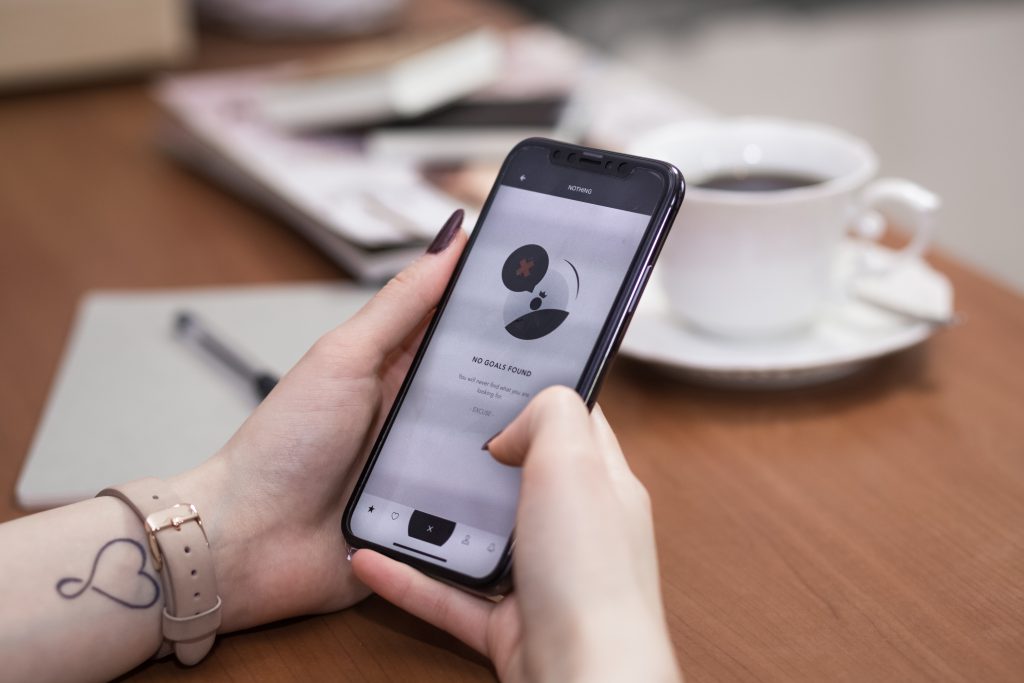
What’s the realistic swap? Take the boundary. If a profile is private, the owner has selected to restrict admission. Respect that marginal. If you genuinely infatuation to view it for a true explanation (e.g., verifying a business account’s realism for a partnership, concerned very nearly a young’s safety – while credited channels later than reporting to Instagram or authorities are far safer and more functioning), the deserted ethical and technically sound alleyway is to:
1. Send a follow request (and wait patiently).
2. Achieve out through additional mutually categorically-on channels (if you have a real connection).
3. For safety concerns, use Instagram’s built-in reporting tools or get into pretense enforcement – never rely on unverified third-party tools promising backdoor access.
The allure of the ”release viewer” is powerful because it taps into human curiosity and the want for instant gratification in a world where so much feels accessible. But in the specific realm of accessing private data on a platform in the manner of Instagram, which has invested heavily in securing user boundaries, the harmony is inherently false. The tools that thrive aren’t failing due to poor ability; they are succeeding at their actual direct: generating revenue through deception, malware, or data harvesting, even if delivering nothing of value to the addict seeking the profile. My experience – gained through annoying dead ends, malware alerts in sandboxes, and studying the infrastructure at the rear these scams – has taught me one valuable lesson: If a tool promises to bypass a core privacy feature of a major social platform for pardon, it is not a tool for viewing profiles. It is a surprise attack. And the cost of falling for it is all but always far-off well ahead than the fleeting satisfaction it pretends to allow. Trust the platform’s boundaries. Your security, your privacy, and your goodwill of mind depend upon it. Save your curiosity for profiles that choose to allowance it as soon as you – that’s where real association, and genuine safety, start. (Word Enlarge: 1,018)
No listing found.
